Work backward from opening the basket
Imagine setting out lunch: the dressing is within reach, the sandwiches have held their shape and nobody is searching for a knife. Now work backward. Which elements can be prepared separately? Which should stay dry? Which need to remain cold until serving? This approach produces a better plan than making every finished dish the night before and hoping that texture and temperature will look after themselves.
Write a short task list against your actual departure time. Include the less photogenic jobs: washing containers, clearing refrigerator space, freezing suitable ice packs and checking that lids match their bases. Confirm that your cooler can accommodate the food and sufficient cooling material together. A beautifully prepared salad is not a successful make-ahead dish if you have nowhere safe to chill or transport it.
- Before shoppingConfirm your menu, allergies, headcount and transport. Check the fridge and the cooler.
- The day beforePrepare suitable components, bake a sturdy dessert and gather clean containers. Keep perishables refrigerated.
- Departure morningDrain fillings, assemble sandwiches and pack dressings separately. Check chilled food and the cooler.
- At the picnicTake out small portions, finish salads as needed and keep the remaining food cold.
Prepare components, not a soggy finished meal
Robust vegetables can often be washed, dried and portioned ahead of assembly. Drying matters: extra water collects in containers, softens bread and dilutes dressing. Keep washed produce in clean, food-safe containers and follow ingredient-specific storage advice. Treat washed leaves gently and give delicate herbs their own space instead of crushing them beneath heavier ingredients.
For a sandwich, prepare a drained filling and any spread separately. Slice sturdy vegetables as appropriate, then store each element under the conditions it needs. Assemble closer to departure when practical, especially when tomatoes, pickles or other moist ingredients are involved. A little advance organisation can preserve a fresh bite without asking you to construct lunch on a windy blanket.
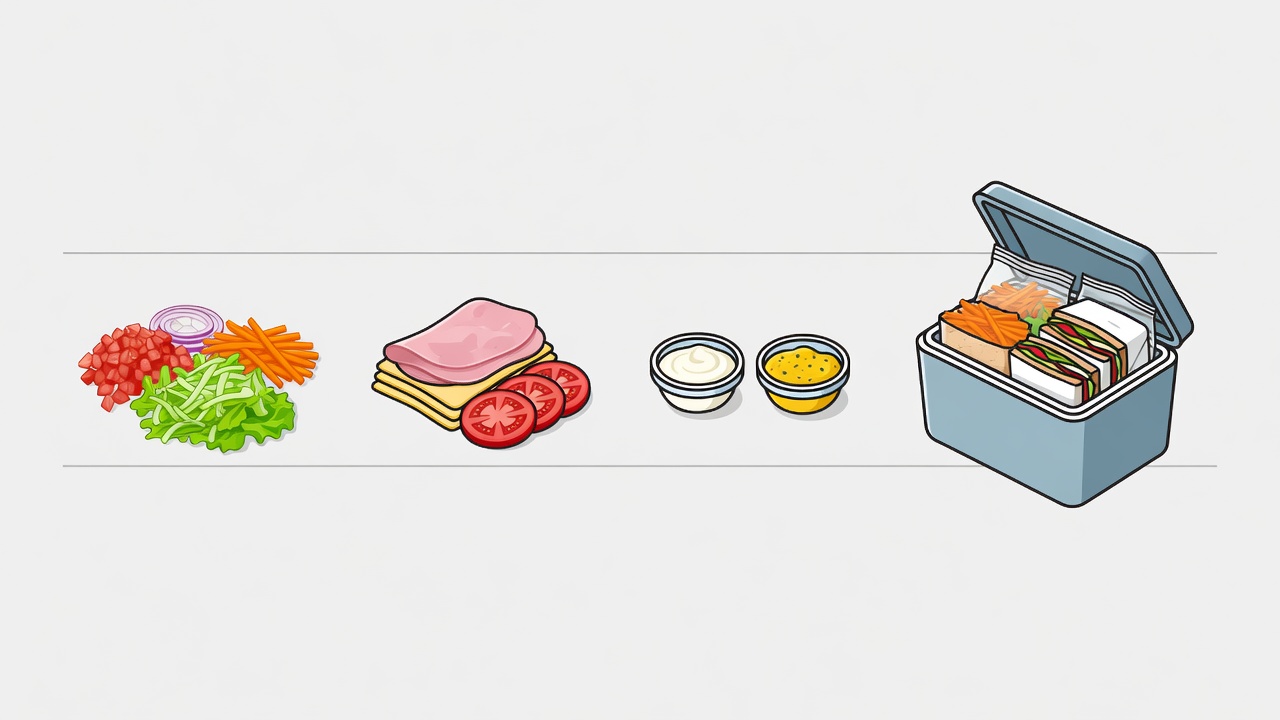
Give cooking and cooling their own space
If you are cooking grains, beans, eggs or other perishable components, use a reliable recipe and handle them safely afterward. Do not leave a deep pot on the counter until it feels completely cool. Divide cooked food into shallow containers and refrigerate promptly, following the relevant official guidance. A crowded refrigerator and a tightly packed large container can make cooling less effective.
There is no single storage period that suits every salad or filling. Ingredients, cooking method, refrigerator temperature and earlier handling all matter. Follow package instructions and trustworthy guidance for the specific food. If your gathering includes someone who is pregnant, older, immunocompromised or otherwise more vulnerable to foodborne illness, choose dishes and handling practices with their needs in mind.
Choose a dessert that gives you breathing room
A plain loaf cake, shortbread or simple oat bar can remove a job from departure morning. Use a recipe that specifies its own storage method and allow baked goods to cool appropriately before enclosing them. Cut portions once the structure is firm enough to stay neat. Separate layers with food-safe parchment and keep the dessert in a container that will not crush under the rest of the basket.
Do not assume that all cakes or bars are shelf-stable. Cream, custard, soft cheese, fresh fruit fillings and some toppings change the storage requirements. If a dessert needs refrigeration, make space for it in the cooler or choose something else. The practical choice is often the one that lets you offer a pleasant finish without managing another delicate temperature-dependent dish.
Prepare the work. Preserve the freshness. Leave room for a calm departure.
Make the morning a finishing session
Set out your list before starting. Wash hands, clean the preparation area and use separate equipment where needed to avoid cross-contamination. Assemble the savoury food, portion the dessert and check the labels. Make sure each dish has a serving tool and that dietary information stays attached to the right container. Keep ingredients or packaging available when someone may need to check them.
Pack chilled food directly from the refrigerator into a prepared cooler shortly before leaving. Avoid detours that extend the journey unnecessarily. Put a separate bag near the door for napkins, plates, a blanket and waste bags so these do not compete with cold food for space. Finally, give the route and meeting details one more look. The packing guide takes over from here, while the portable food guide helps you choose combinations that hold together.